FERAL Animal Survival Predators and Prey: Hunter and Prey Animals
Which FERAL animals are hunters, which are prey, and how does your role change the way you play? The carnivore, herbivore and omnivore list.
Every animal in FERAL Animal Survival is one of two things: the hunter, or the prey. That is the game's own description of itself, and it is more than flavor text — your role decides what you eat, how you grow stronger, what your F ability does once it unlocks, and what you should do when a bigger animal starts walking toward you.
Quick answer
FERAL Animal Survival is built around a hunter/prey split: carnivores grow by hunting other animals, herbivores grow by eating grass and staying alive, and both roles climb the same baby-to-elder growth ladder. Death resets your growth, but your Amber survives.
- Hunters (carnivores): wolf (starter), river otter, cougar, bald eagle, python, alligator, tiger.
- Prey (herbivores): deer (starter), porcupine, white-tailed deer, elk, Asian elephant, bison, rhino.
- Omnivores: red fox and grizzly bear — the create menu files them as a separate group.
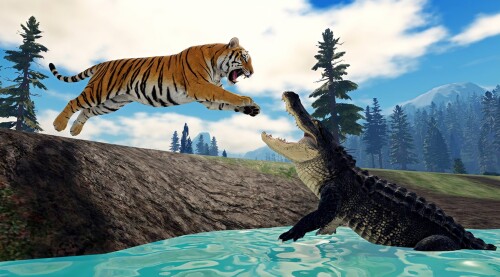
Who hunts and who gets hunted: the animal roster
Updates keep adding animals (a hippo arrived after this lineup), so treat this as the roster confirmed in the create menu, not a guaranteed-complete list.
The create menu is where the hunter/prey split becomes concrete. Alongside the two starters — the game's own pitch is that you are born as a tiny wolf or a wobbly deer — it lists hunter-type animals, herbivores and a separate omnivore group holding the red fox and grizzly bear. Every animal on the list has its own baby model, so whichever role you pick, you start the same way: tiny, wobbly and low on the valley's food chain. The river otter sits in the menu too, though players have flagged it as a later unlock ('we can get an otter soon'), so don't count on it being yours on day one.
Data table
- Animal
- Wolf
- Role in the valley
- Hunter (carnivore)
- Note
- Starter
- Animal
- River otter
- Role in the valley
- Hunter (carnivore)
- Note
- Flagged by players as a later unlock
- Animal
- Cougar
- Role in the valley
- Hunter (carnivore)
- Note
- -
- Animal
- Bald eagle
- Role in the valley
- Hunter (carnivore)
- Note
- -
- Animal
- Python
- Role in the valley
- Hunter (carnivore)
- Note
- -
- Animal
- Alligator
- Role in the valley
- Hunter (carnivore)
- Note
- -
- Animal
- Tiger
- Role in the valley
- Hunter (carnivore)
- Note
- -
- Animal
- Deer
- Role in the valley
- Prey (herbivore)
- Note
- Starter
- Animal
- Porcupine
- Role in the valley
- Prey (herbivore)
- Note
- -
- Animal
- White-tailed deer
- Role in the valley
- Prey (herbivore)
- Note
- -
- Animal
- Elk
- Role in the valley
- Prey (herbivore)
- Note
- -
- Animal
- Asian elephant
- Role in the valley
- Prey (herbivore)
- Note
- -
- Animal
- Bison
- Role in the valley
- Prey (herbivore)
- Note
- -
- Animal
- Rhino
- Role in the valley
- Prey (herbivore)
- Note
- -
- Animal
- Red fox
- Role in the valley
- Omnivore
- Note
- -
- Animal
- Grizzly bear
- Role in the valley
- Omnivore
- Note
- -
The roster detail for each animal lives on our FERAL Animal Survival all animals page.
Playing a hunter: grow first, hunt second
Hunters don't start dangerous. A new wolf pup spawns at 6% growth, and the tutorial's first lesson is a kill of the smallest kind: click to bite a mouse, eat it, and watch your growth climb. The real weapon arrives at 34% growth, when your pup becomes a teen and unlocks its LUNGE ability — 'jump at your prey and bite on'. Until then the F slot sits locked behind a growth requirement, so a young hunter's best move is to eat and grow before picking fights.
Once LUNGE is yours, hunting runs through the F key: get close to a deer, press F, and you leap on and latch, with a '[F] TO LET GO' prompt showing while your damage ticks over the prey. Hunting has costs — letting go drops you into a crouch with F on a cooldown, and a hunt drains your own health too. The carnivore quest line points you straight at the loop ('Hunt a deer', 'hunt a herbivore'), and eating your kills is what pushes your growth up. Even before deer are on the menu, the valley stocks small prey like mice, so a tiny carnivore has something small to chase from the start. The FERAL Animal Survival hunting guide picks up from here.
Prey animals hit back — and hunts fail
Hunter versus prey is not strong versus weak. Prey in FERAL fights, and it wins often enough to matter: a juvenile deer rammed an attacking wolf back again and again, an otter attacked and killed a wolf, a snake severely wounded an otter, and a bison killed a player's fox. These are observed outcomes rather than damage formulas, but the lesson is simple — never read 'herbivore' as 'safe target'.
Hunts also fail on their own terms. Prey can break away mid-lunge — one deer slipped straight off a latched wolf — and the lunge then sits on a cooldown, leaving the hunter unable to re-lunge ('I can't lunge at it because I have a cool down') while the target rams, runs or turns to fight. If you hunt, treat every pounce as a commitment: a whiffed LUNGE is the most exposed moment of your hunt. If you're the prey, that cooldown window is your opening to run.
Playing prey: graze, drink, keep an exit in reach
Herbivores don't have to hunt — your food is grass, and grazing chains itself: as one hippo player put it, when you eat, the game 'goes straight for the other grass without having you to press the button again'. Finish a patch and your animal walks itself to the next, so prey play is less about button-mashing and more about choosing grazing spots with room to run.
Escape is your real defense, and water is the proven exit: the same juvenile deer that rammed a wolf ended that fight by swimming away, leaving the wolf pacing the shoreline with no way to follow. Learn where the rivers and lakes are before a hunter finds you — the FERAL Animal Survival how to escape predators guide covers that side of survival in depth.
The growth ladder both roles climb
Hunter or prey, every animal ages through the same stages: baby, teen, adult and elder. For the wolf, teen arrives at 34% growth, and as a teen the next goal bar runs to 67% for adult; the otter's banner — 'Your otter is an adult. Keep going to be an elder' — confirms elder as the stage beyond adult. Age is power: becoming older makes your animal stronger, which is why a teen wolf can hunt deer and why you should never assume size decides a fight in this game — an otter can kill a wolf.
Death rolls the ladder back. When your animal is killed, you're reset to a baby: growth drops to 1%, the F ability locks again, and you re-earn every stage from the bottom. The one thing a reset doesn't take is your Amber, which survives the death intact. How each stage works is mapped further on our FERAL Animal Survival growth stages page.
Wounds carry their own rules mid-fight. Damaged animals bleed — and can bleed out if the attacker lets them — and heavy hits can inflict limping, which can shut an animal down entirely: 'I made him limp. Now, he can't move.' For a hunter, bleed and limp are how you wear down something that fights back; for prey, a limp is the emergency that turns a chase fatal.
Where to go from here
- Just starting out? The FERAL Animal Survival beginner guide covers the basics.
- Torn between the two starters? Compare the FERAL Animal Survival starter animals, the FERAL Animal Survival wolf guide and the FERAL Animal Survival deer guide.
- Keeping either role fed and hydrated: FERAL Animal Survival how to find food and FERAL Animal Survival how to find water.
Related Guides
All Animals & Robux Costs
Every confirmed animal: the two starters, the create-menu roster, update additions like hippo, and which ones cost Robux.
Hunting Guide: Find & Kill Prey
Unlock Lunge at 34% growth, track prey with scent and night vision, and latch on to land your kills.
How to Escape Predators
Break a chase by reaching water, learn the dive controls, and spot hunters before they strike.
Growth Stages & GROWTH Meter
How the GROWTH meter works from baby to teen at 34%, adult at 67% and elder beyond, plus what death resets.